Piano Handling, Up Close
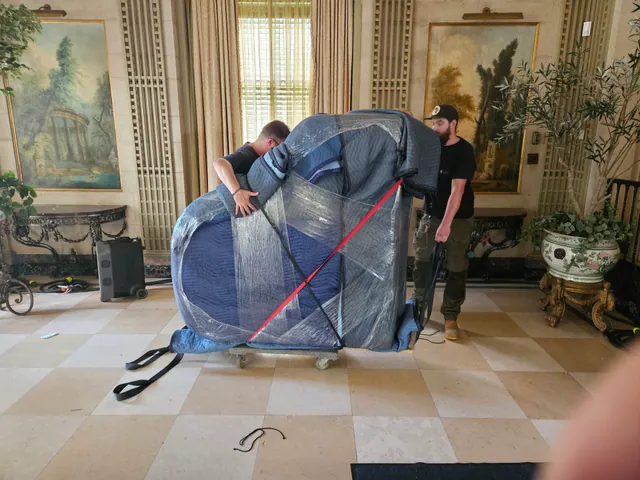
Protective preparation and a clear route are part of planning the move before the piano reaches the door.
Serving Toronto piano owners since 2001. Specialized piano moving crews, certified A440 tuning oversight, structured quote planning, WSIB compliance, and $2 Million liability insurance included with every professional move.
A safe piano move starts before the first lift. Our quote process collects piano type, stair counts, elevator details, loading dock rules, parking access, route photos, timing flexibility and delivery conditions so the crew arrives with the right plan.
Stairs, tight turns, condo elevators, loading docks, parking windows and floor protection are reviewed before pricing.
Grand, baby grand and upright moves require different dollies, skid boards, pads, straps and crew positioning.
Flexible moves can sometimes fit a more efficient route, while dedicated moves receive a firm schedule and crew plan.
The price is based on real access, piano type and route conditions, not a vague phone guess that changes on move day.
Moving, tuning, storage and used-piano decisions each need different information. We help customers identify the access, instrument condition and timing details that matter before work is booked.
Many budget movers claim they are "fully insured," but under Ontario carriage regulations, if they don't issue a proper Bill of Lading with a declared value, their default liability is legally capped at just $2.00 per pound! This means a high-value $20,000 piano would be covered for only $1,000 in a total loss. Don't risk your investment. Piano Movers Toronto automatically provides a binding Bill of Lading with full declared liability of up to $2,000,000 included in your standard quote at no extra cost.
Specialized moving of grand, baby grand, upright, and console pianos. We utilize heavy-duty protective skids, customized premium padding, custom hoist rigging systems, and custom floor runners to safeguard your instrument and architecture.
Storage planning should limit abrupt environmental swings and keep the piano protected between pickup and return delivery. We review the instrument, access dates and return plan before confirming storage.
Restore pure, classical resonance with pitch correction and tuning services. Led by our master concert piano tuner with over 25 years of elite experience tuning for prestigious concert halls, schools, recording studios, and residential homes.
Safe and responsible extraction of aged, completely damaged, or unplayable pianos. We prioritize components sorting, wood recycling, and ecologically conscious dismantling according to GTA municipal guidelines.
Protective preparation and a clear route are part of planning the move before the piano reaches the door.
Coordinate site access, move-out, monthly storage and return delivery with a restoration contractor.
Piano services for restoration companiesPlan piano availability, studio or location delivery, camera-ready placement, temporary removal or storage, room-to-room moving and pickup after wrap. Piano type, access and production dates must be confirmed.
12 Consecutive Years #1
We believe outstanding service is the only way to build long-term relationships. Over 580 verified reviews on HomeStars prove that GTA home owners trust us implicitly to protect, transport, and maintain their acoustic masterpieces.
We do not just lift weight; we understand piano science. Browse our certified technical insights to ensure your instrument remains in flawless condition.
A few Toronto piano relocations from our recent schedule. Real jobs, real prices, real logistics; no two moves are identical.
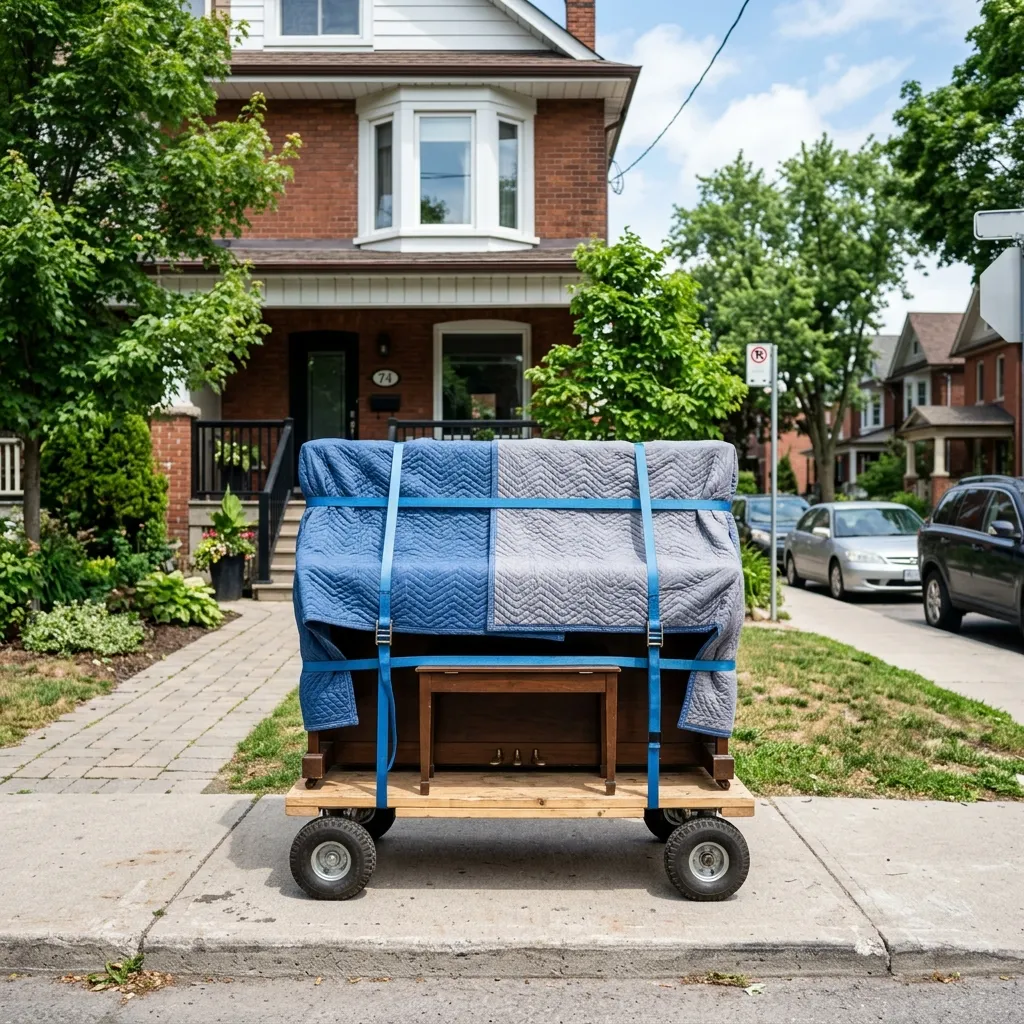
The family uprightly relocated from a detached home in The Kingsway to a renovated semi-detached near Danforth. The Etobicoke pickup involved a tight front entrance and a turn at the staircase landing, handled with a 4-strap skid board rotation. At the destination, the piano went up the front steps and through a narrow vestibule.

Shore Breeze (Etobicoke) to Lakeshore West condo to Mississauga detached. Coordinated elevator bookings at both condo buildings, single-day completion.

Long-distance route, approximately 110 km. Client provided staircase photos in advance for crew planning and accurate quoting before pickup day.
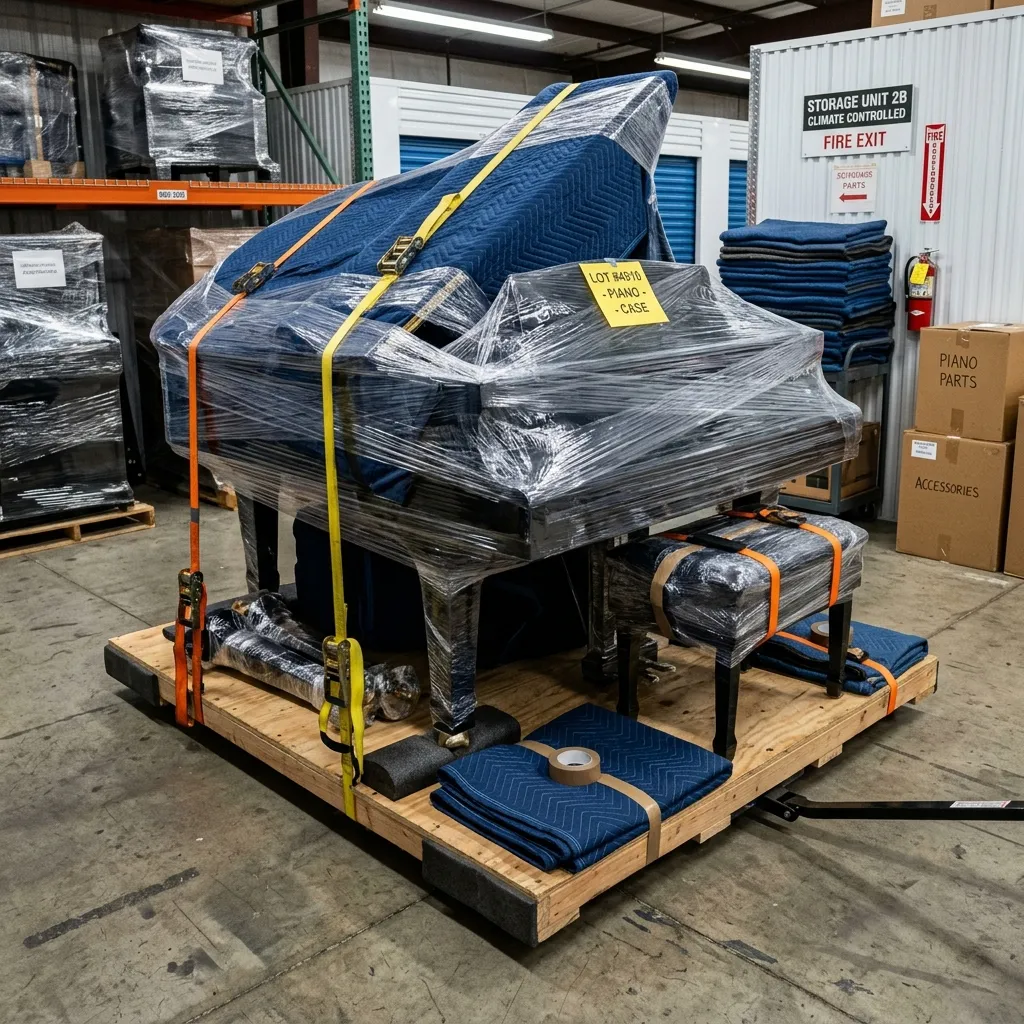
Client between properties. Full disassembly of legs and lyre, climate-stable wrap, and transit to our temperature-monitored storage facility.
Piano Movers Toronto completes piano relocations across Toronto and the GTA daily, with longer routes to Waterloo, Ottawa, Montreal, and across Canada available on request.
Read customer feedback directly on the independent Google Business Profile. Reviews are not copied, edited, or republished on this website.
Everything you need to know about professional piano moving, secure storage, and tuning services in Southern Ontario.
Yes. Piano Movers Toronto is 100% compliant with the Workplace Safety and Insurance Board (WSIB) of Ontario, ensuring all crew members are fully protected. We carry a robust $2 Million liability insurance policy on every move.
Beware of the $2.00/lb Trap: Under Ontario Carriage Regulations, if a mover does not issue a formal Bill of Lading with a declared value, their legal liability defaults to a maximum of only $2.00 per pound for damaged merchandise. For a 500lb piano, that is a mere $1,000 in compensation for a total loss, regardless of whether it is a $30,000 grand! Piano Movers Toronto protects you completely: we automatically issue a legally binding Bill of Lading with your piano's full declared value (up to $2,000,000) recorded and fully insured at zero additional charge.
Piano Movers Toronto has served Toronto and the Greater Toronto Area since 2001. Our work includes upright pianos, baby grands, grand pianos, condo moves, stair moves, storage moves, long-distance piano transport and tuning coordination.
Before move day, we collect the piano type, stair counts, elevator or loading dock details, parking access, route photos and preferred schedule. That lets us plan the crew, equipment and quote around the real access conditions instead of guessing over the phone.
Sometimes. If your date or time is flexible, a long-distance piano move may fit an optimized same-direction route-share trip. Dedicated delivery is always available, and any route-share price is reviewed manually based on schedule and route fit.
Toronto piano moving cost depends on piano type, stairs, elevator access, parking, distance, timing and whether the instrument is upright, baby grand or grand. See our Toronto piano moving cost guide or send route photos for a firm quote.
A piano can react to large temperature and humidity swings during storage. Before booking, confirm the storage arrangement, access dates, condition check process and return-delivery plan for the instrument.
We strongly recommend waiting 2 weeks after delivery before tuning. The mechanical transit does not detune the strings, but the slight difference in humidity and temperature between the source and destination rooms requires that the wood soundboard acclimate to the environment before tension tuning occurs.
To provide a completely accurate and firm quote, we require: (1) The specific model, height (for uprights), or length (for grand pianos), (2) The layout details of the origin and destination addresses, focusing on the number of stairs, sharp hallway turns, tight elevator dimensions, or gravel pathways, and (3) The target date of your move. Please submit all details through our secured Google Form below.
Under Ontario law, if you hire an independent contractor or a moving company that does not possess active, valid WSIB (Workplace Safety and Insurance Board) coverage, you as the homeowner are legally defined as the "employer" in the event of an on-site injury. If a worker slips on your stairs while carrying a heavy piano, you could be held personally liable for their medical expenses, lost wages, and face substantial civil lawsuits. Always ask your piano mover for an active WSIB clearance certificate. Piano Movers Toronto is 100% WSIB registered and compliant, shielding homeowners from all liability.
Unlike generic movers who handle furniture, our crews are trained specifically in heavy-rigging mechanics, route access planning, and physical care for soundboards, actions, and gold frames.
We collect piano type, stair counts, elevator rules, loading dock details, route photos and schedule constraints before the crew is assigned.
Toronto condo moves, tight stair moves and long-distance routes are reviewed for crew size, equipment needs and timing before move day.
Once we provide a firm quote from accurate access details, the price remains locked. WSIB and $2M liability insurance are included.
Check Your Clearances: Please measure your piano's dimensions (width and height) and ensure all doors, hallways, staircases, and ceilings along the moving route have sufficient space for safe passage.
The $320 starting price applies to apartment-size upright pianos (42 inches / 108 cm or shorter), subject to distance, stairs and access. A standard upright (43-48 inches) starts at CAD $350 + HST ($395.50 total): it is a different piano-size base rate, not a route discount.
The calculator includes up to five steps at each location and a 30 km distance allowance. Longer routes or crew travel and additional steps can increase the price. Elevator, spiral-stair or unknown access needs review. Photos/video and administrator review are required before final price and booking confirmation.
Get a rough moving estimate · quote@pianomoverstoronto.com · Quote and booking process
